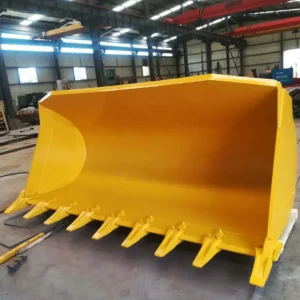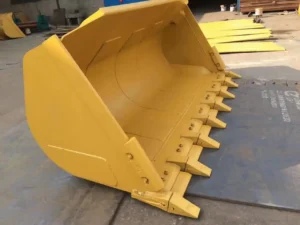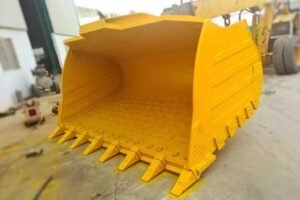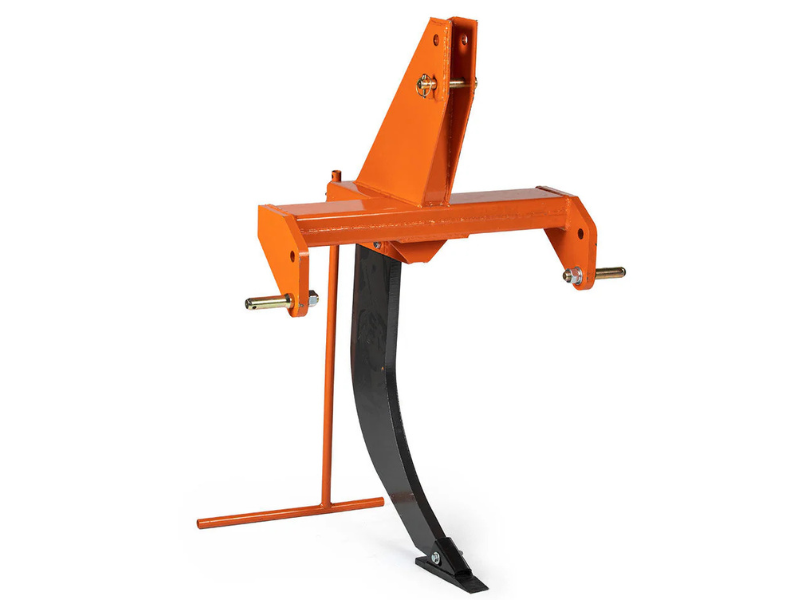
The Excavator Single Shank Ripper is a deceptively simple-looking tool that plays an outsized role on construction, mining, and agricultural sites. Designed to break up hard, compacted ground and rock, the single shank ripper converts an excavator’s brute force into a focused, puncturing action. But behind that apparent simplicity is careful engineering: material selection, structural geometry, stress management, and mounting design all combine to deliver durability, penetration power, and efficient operation.
A single shank ripper is a single-tooth attachment bolted or pinned to an excavator boom or quick coupler. Unlike multi-shank rippers or shear-type attachments, the single shank provides a concentrated point of contact that slices and tears compacted soil, frozen earth, asphalt, and some rock. Typical applications include pre-trenching, clearing frozen ground, breaking clay pans, and loosening blasted rock for loading.
The ripper’s job is to concentrate the excavator’s force into a narrow area so the ground fails in tension and shear. Engineers design the shank’s cross-section and taper so that bending and shear stresses are directed away from high-wear zones and into mass that can absorb loads. The geometry must balance a sharp, wear-resistant tip for penetration with a robust backbone to resist bending and shock.
Wear resistance and toughness are the two competing demands. Typical ripper shanks are made from high-strength alloy steels (e.g., boron or quenched-and-tempered steels). The tip often receives additional surface hardening — carburizing, induction hardening, or weld-on hardfacing with chrome or carbide layers — to resist abrasive wear. The shank body is kept tougher and less brittle to resist impact and prevent catastrophic fracture.
Tooth geometry controls penetration efficiency and wear characteristics. A narrower, more acute tip penetrates more easily but wears faster and concentrates stress at the tip. Wider, blunter tips last longer and distribute load better but need more force to penetrate. Replaceable teeth systems let operators choose tooth profiles for rock, frozen ground, or softer soils, and they enable quick maintenance without replacing the entire shank.
Modern single shank rippers use tapered shank profiles and boxed or flanged sections that increase section modulus where bending moments are largest. Gussets, ribs, and thickened mounting plates reduce stress concentrations at the connection points. Finite element analysis (FEA) is commonly used in design to identify hot-spots and optimize material distribution, achieving the minimum weight for required strength.
The connection to the excavator is a critical failure point. Mounting brackets, pin positions, and the layout of the carrier plate are engineered to distribute loads into the machine’s structure rather than localize them. Pins are sized for shear and bending, and bushings are used to reduce fretting wear. Quick-change systems add convenience but must be engineered to avoid introducing additional flex or stress raisers.
Rippers experience cyclic impacts — striking a rock, bending, rebounding — which produce fatigue loading. Designers focus on eliminating sharp corners, providing generous radii at weld transitions, and maintaining compressive surface finishes where possible to delay crack initiation. Weld quality and post-weld treatments are also critical because poor welding can dramatically reduce fatigue life.
Penetration-to-power ratio: An efficient ripper translates engine hydraulics into deep penetration with minimal cycle time. Tip profile, shank angle relative to the bucket linkage, and correct machine matching are all required.
Wear economics: Replaceable tooth systems and localized hardfacing control lifecycle costs. Interchangeable tooth inventories optimize uptime.
Machine compatibility: Rippers sized properly for excavator class (weight and hydraulic capabilities) prevent under- or over-loading — both of which reduce productivity and lifespan.
Operator technique: Proper approach angle, controlled penetration depth, and use of machine weight (ballast or counterweight) all influence fuel consumption and wear.
Inspect pins and bushings for ovalization and excessive play; replace as needed.
Check the shank and tooth for cracks, especially near welds and at the throat where geometry changes.
Maintain tip hardfacing — grind or replace teeth before excessive base-material loss exposes softer steel.
Lubricate moving connections where applicable to reduce fretting.
Follow the manufacturer’s torque and fastener-retention specs; loose hardware creates harmful micro-movements.
Selecting the right Excavator Single Shank Ripper means balancing penetration needs, expected wear, and available power. For fracturable rock, use a narrow, hardened tooth and heavier shank. For frozen ground and mixed soils, a more robust shank with a wider tooth profile and replaceable tips extends service life and reduces downtime.
The Excavator Single Shank Ripper is a study in applied engineering: concentrating enormous forces into a single point while protecting the rest of the structure from damage. Success comes from harmonizing material science, geometry, connection design, and wear management so operators get reliable penetration, long life, and predictable maintenance cycles. When properly specified and maintained, a well-engineered single shank ripper is a simple attachment that delivers outsized value on the toughest jobs.