In today’s civil construction and earthmoving plays, attachments are just as crucial as the machine itself. Among the many tools available, the excavator single shank ripper stands out when it comes to tackling tough ground — compacted soils, rock‑infused layers, hardpan or frozen strata. This blog will explore what this attachment is, how it improves productivity, and why it’s a smart choice for contractors — especially in the context of your company, PixelTech (which works in software development, but the construction & earth‑moving domain is increasingly data‑driven!).
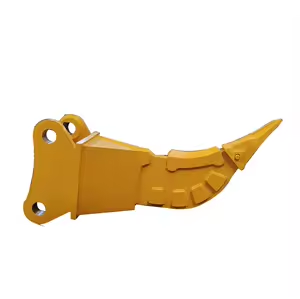
A ripper attachment is a claw‑like tool fixed onto an excavator (or sometimes a dozer) used to break up hard ground before the main excavation or loading phase. As one technical resource explains:
“Rippers (Ground Penetration) … Single‑shank rippers concentrate force for deep penetration into rock or frozen strata.”
The “single shank” version means the attachment has one tooth or tip concentrating the machine’s ripping force at one point. Compared to multi‑shank models, this single point approach allows deeper, more forceful penetration in tough ground.
Key features typically include:
High‑strength steel shank (e.g., Hardox® grades) for durability.
Replaceable tooth tips, wear plates, adapters.
Compatible design for quick‑coupling to excavators for fast switching between bucket and ripper mode.
Let’s talk about how this attachment translates into real productivity improvements on earthmoving projects.
When dealing with hard material — compacted soil, old foundations, rock lenses, frozen ground — a bucket alone may struggle. The single shank ripper concentrates the machine’s breakout force into one point, delivering higher penetration depth and breaking the material more efficiently.
For example, one analysis states:
“The Single Shank Ripper concentrates the machine’s available horsepower into one point, giving it a slight edge in maximum penetration depth per shank.”
This deeper, more effective fracturing means fewer passes are needed, fewer hours wasted, and therefore faster progress.
By loosening or fracturing material ahead of loading/excavation, subsequent bucket or loading cycles become more efficient. According to one source:
“The real strength … lies in its ability to break through materials that would stump other attachments. By applying concentrated force, rippers can fracture rocks, split frozen ground, and tear through compacted soil layers.”
This means the excavator spends less time “hammering” at hard ground with the bucket, which is inefficient, and more time on actual material movement.
Because the ripper does the “hard breaking” job, the bucket and excavator components avoid undue stress. One article highlights:
“By using the ripper to break up hard materials first, the bucket encounters less resistance … This reduced strain translates to lower stress on the excavator’s hydraulic system, boom, and arm structures.”
Less wear and tear means less downtime for repairs and maintenance — a direct productivity benefit.
Time saved is money saved. The ripper enables faster completion, which reduces labour hours, machine hours, and fuel consumption.
One summary points out:
“By expediting the process of breaking up tough materials, rippers contribute to overall project efficiency. Equipment downtime is minimized, and operators can maintain a steady workflow without frequent equipment changes … This streamlined approach enhances productivity…”
Even though the attachment is an investment, the ROI can be significant when used in appropriate ground conditions.
Ground conditions on a site may vary — hard rock pockets, compacted fill, varying soil layers. Having a single shank ripper enables the excavator to handle unexpected tough spots without bringing in extra machines or resorting to blasting.
As one guide notes:
“The versatility of excavator rippers makes them indispensable in various industries … In construction … site preparation, road building, and foundation work.”
In short: you get more done with the same machine, reducing fleet complexity and mobilization hassle.
To make the most of your excavator single shank ripper, you’ll want to focus on both operator technique and site matching. Here are some best practices drawn from field guidance:
Match the machine and ripper size: The excavator’s hydraulic capacity, breakout force, and stability must align with the ripper. Oversized or undersized combinations reduce efficiency.
Set the correct ripper angle: Because all force is delivered via one shank, the angle of attack matters a lot. Too steep or shallow reduces penetration and causes extra wear.
Plan your ripping run: For tough rock or hardpan, ripping should ideally go downhill where possible and maintain full track contact to maximise drawbar pull.
Ensure tooth condition is good: A dull or worn tooth reduces performance quickly. Daily checks and timely replacement of wear parts maintain ripping efficiency.
Use the ripper‐then‐bucket workflow: First use the ripper to fracture the material, then switch back to bucket/loader for removal. This two‑step approach is far better than trying to dig hard ground directly with a bucket.
Consider fuel and wear savings: Because the ripping phase reduces drag and machine load, it helps cut fuel consumption and undercarriage wear over the project lifespan.
Even though PixelTech is a software development company, your clients or the partners you cooperate with in infrastructure, construction, or earth‑moving operations can benefit from the productivity gains of the excavator single shank ripper. Especially when you’re designing digital solutions for fleet management, telematics, or productivity analysis — this attachment becomes a valuable variable.
In project scheduling software, you can factor in faster cycle times when a ripper is used in the right ground conditions.
In predictive maintenance modules, monitoring ripper tooth wear, angle settings, or machine load can help optimise uptime.
In cost‑analysis dashboards, you can compare the cost per cubic metre of ripped vs non‑ripped zones, attribute savings, and support investment decisions.
In other words: understanding the why and how of the ripper translates into measurable KPIs that your software tools can capture and analyse.
The excavator single shank ripper is an attachment that delivers deep penetration, increased throughput, reduced wear, and greater flexibility for earthmoving operations. When used appropriately and maintained properly, it boosts productivity significantly — fewer passes, less machine strain, faster turnarounds. For contractors working in tough ground, and for software providers like PixelTech enabling those workflows, the ripper is a high‑leverage asset.