When it comes to excavation and ground-breaking operations, having the right attachment can make all the difference. One of the most powerful and effective tools in an excavator’s arsenal is the ripper attachment—used for breaking through compacted earth, rock, frozen ground, and other tough materials. However, choosing between a Single Shank Ripper and a Multi-Shank Ripper can be challenging.
Each type serves a unique purpose, and understanding their differences can help you choose the ideal tool for your jobsite. In this article, we’ll explore both options in detail and explain when the Excavator Single Shank Ripper might be your best choice.
An excavator ripper is a robust attachment designed to penetrate and break up hard surfaces that are difficult to handle with standard buckets. It acts like a claw that tears through compacted soil, hard clay, frozen ground, and even rocky terrain.
Rippers are widely used in industries such as mining, quarrying, road construction, and demolition. Depending on the type of material and job conditions, operators can choose between single-shank and multi-shank rippers.
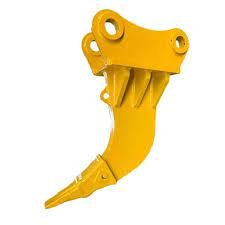
The Excavator Single Shank Ripper is a heavy-duty attachment with one powerful, curved tooth designed to deliver maximum penetration force. Because the entire machine’s hydraulic power focuses on a single point, this ripper excels in breaking through highly compacted materials and solid rock.
It’s ideal for:
Breaking hardpan, shale, or frozen ground
Mining and quarrying operations
Demolition of rock formations or old concrete bases
Pre-ripping before excavation or trenching
Its design minimizes wear and tear on the excavator while maximizing penetration depth. The single tooth’s reinforced structure ensures durability and reduces stress on the machine arm.
A Multi-Shank Ripper features two or more shanks (teeth), allowing it to cover a wider area during operation. While it doesn’t offer the same concentrated force as a single-shank version, it’s excellent for loosening medium-density materials over a larger surface.
It’s ideal for:
Tilling compact soil or clay layers
Breaking surface crusts before grading or leveling
Preparing farmland or landscaping sites
Shallow excavation over larger areas
This type of ripper offers better productivity in applications where full penetration isn’t necessary but consistent surface loosening is.
| Feature | Excavator Single Shank Ripper | Multi-Shank Ripper |
|---|---|---|
| Penetration Power | Very high – focuses force on a single point | Moderate – distributes power across multiple teeth |
| Coverage Area | Smaller, ideal for deep ripping | Larger, ideal for surface loosening |
| Best Use Case | Rock, hardpan, frozen ground | Clay, compact soil, light rock |
| Durability | Very strong and reinforced | Slightly lighter construction |
| Speed of Operation | Slower but more powerful | Faster for shallow ripping |
| Machine Load | High stress on one point | Balanced across shanks |
The Excavator Single Shank Ripper is the best option when you need maximum penetration power and precision. If your jobsite involves hard rock, frozen terrain, or heavily compacted soil, this attachment provides unmatched performance.
You should choose a single shank ripper if:
Your project involves deep excavation or mining.
You need to pre-rip tough ground before using a bucket.
You want to reduce strain on your excavator while maximizing efficiency.
You often work in cold climates or rocky environments.
Its design ensures cleaner cuts, controlled force application, and superior durability—making it a favorite among operators working in demanding conditions.
Opt for a multi-shank ripper when you need to cover more area quickly rather than focus on deep penetration. It’s more efficient for agricultural, landscaping, or light construction projects where the material isn’t too dense.
You should choose a multi-shank ripper if:
You’re loosening moderately compact soil.
Your site involves surface preparation rather than deep excavation.
You need faster coverage over a wide area.
While it doesn’t match the brute force of a single-shank model, it excels in efficiency and productivity for lighter jobs.
Both single and multi-shank rippers have their place in modern excavation. However, if your work often deals with tough materials, the Excavator Single Shank Ripper stands out as the ultimate tool for performance and reliability. Its concentrated power ensures faster, cleaner results and reduces wear on your excavator.
On the other hand, for jobs that prioritize speed over strength, a multi-shank ripper can be more economical and time-saving.
Ultimately, the choice depends on your jobsite conditions, material type, and operational goals. Understanding these differences helps ensure you invest in the right attachment for maximum productivity and longevity.